Museumegypt provides information about Egypt and its vast history, landmarks, places of interest, archaeological locations and museums in both English and Japanese. The site is run and owned by Yasser Kamel a professional and licensed tour guide and Egyptologist operating in Egypt. Our professional tour guides who will be happy to provide you with travel related services within Egypt, and will be more than happy to answer all inquiries, questions and exchange of ideas and opinions.
Wednesday, April 27, 2011
Animals rituals in ancient Egypt. Part B
The most incredible evidence of how much the Heb-Sed was essential to stabilize Egyptian powerful kings on their throne is represented on King Zoser’s the Heb-sed complex.
Picture-1
Picture-2
In fact king Zoser ,the founder of the third dynasty was the first depicted king while performing the ritual that follows the fight of the Heb-sed. History of Ancient Egypt has mentioned a lot of kings that performed the same ritual as for king Montuhotep II who was the re-unifier of Egypt and the founder of the 11th dynasty. Montuhotep II fascinating statue in Cairo Museum about 1700 B.C exemplifies the king while dressed the Heb-Sed outfit”Picture 3”. King Amunhotep II carving from the temple of Amada,1400 B.C,the carving “Picture no.2” represents the pharoah while galloping before god Amun in order to present his thanks for being able to complete the Heb-Sed .
Picture-3
The great influence of the ancient Egyptian Heb-Sed ritual can be traced allover the ancient world and even more obvious in the Greek mythology. The Greek myth of Hercules which describes Hercules famous adventure of fighting the Nemean lion, the picture below represents Hercules while fighting the lion of Nemea.
Picture-4 painted by yasser kamel and it represents Hercules while fighting the lion of Nemea.
By Yasser Kamel to Museumegypt, All rights reserved. Copyrigt©Museumegypt.
Sunday, April 17, 2011
Animals rituals in ancient Egypt. Part A
No wonder if the Hieroglyphic characters are in general to represent animals or portions of animal bodies as it belonged to a civilization is African in its core . Back to the early beginnings of the Egyptian cultures the flora and fauna were still rich as Egypt seemed to have a variety of wild animals as for African lions and panthers. Then the gradual change for the global climate such as having more of droughts and dryness had effected the northern African environment which forced many of savannah wild animals to migrate to southern Africa. The remarkable interaction with nature which was still intact had inspired the shapes of the hieroglyphics and its phonograms as for the case of the African lions in the north of Egypt or for the Egyptian vulture in the south of Egypt. The Naqqada “Nakkada”6000-5000 B.C cultures are among cultures that left finds very much relating to the wild nature of ancient Egypt. Naqqada cultures were well located as it occupied middle Egypt where nature was rich in rock formations, hillocks and plains where the savannah could be found. So lions were common as well as vultures and there where man had to confront lions and fight it in order to survive. Soon the lion became to represent a phenomenal force that signed for power and once to be overcome by a man it would sign for the human courage so much later it became what inspired a ritual should be accomplished by the chief of a tribe or by any ruler in order to prove courage , valor and fertility. The ritual of The Heb-Sed was the most essential rite in ancient Egypt that kings had to face to be able to hold throne for thirty years at least, that rite was to include a face
to face physical fight with a lion then later it became replaced with a fight against a bull which could be due to the rareness of lions caused by dryness and droughts.
Nakkada.5000-4000 B.C.Painted by yasser kamel
The very concealed aim for the Heb-Sed rite was to avoid the senility for the ruler as he by circumstances had to enjoy a lot of physical strength in order to lead his nation to a victory. Generally the African mythology can provide a lot of examples for the Egyptian Heb-Sed followed by many nations in Africa as in southern Sudan or in Kenya by the Masai tribe .
African Lion painted by yasser kamel
The Sphinx in ancient Memphis.
The most common tradition in Africa was to dethrone the senile king and crown his heir as most of old kings would not be able to kill a lion in direct fight, but in ancient Egypt kings had a different tactic to follow once they had to execute that rite, just were were keen to accomplish the rite while still been young so they would do it just after one decade of rule in order to keep their throne for another thirty years. The Heb-Sed was to include a throne renewal ceremony for the jubilee of the king as well as a rejuvenation rite. Man in Africa generally and in ancient Egypt specifically used the lion to sign for strength and protection and found in fighting it a great threat to defy, then ancient Egyptian were the first ever to depict their kings with lions statues and images as for the Sphinx of Giza which has a lion body and a man head. By Yasser Kamel to Museumegypt, All rights reserved. Copyrig ©Musegypt.
Wednesday, April 13, 2011
古代 イジプト人 は ぼっけん を つくりましたね。
ツタアンクメン の ぶっけん は1400年 紀元前ん 凡そです。
ツタアンクメン の どうせ つるぎ
日本製刀
古代 イジプト人 は ぼっけん を 造り は おどろき な 事ね。古代 イジプト は まことに けんどう と けんかく も いました。全体 に イジプト人 は たいてい つるぎ を どう が つくりられた。カイロ博物館 に ゆうめえ な おうじゃ は ツタアンクメン の どうせ つるぎ と ぶっけん も ある、その ぶっけん は 1400年 紀元前ん 凡そ、それね、 その物 は一番 古く ぶっけん が あります。By Yasser Kamel to Museumegypt, All rights reserved. Copyrig ©Musegypt.
ツタアンクメン の ぶっけん は1400年 紀元前ん 凡そです。
ツタアンクメン の どうせ つるぎ
日本製刀
古代 イジプト人 は ぼっけん を 造り は おどろき な 事ね。古代 イジプト は まことに けんどう と けんかく も いました。全体 に イジプト人 は たいてい つるぎ を どう が つくりられた。カイロ博物館 に ゆうめえ な おうじゃ は ツタアンクメン の どうせ つるぎ と ぶっけん も ある、その ぶっけん は 1400年 紀元前ん 凡そ、それね、 その物 は一番 古く ぶっけん が あります。By Yasser Kamel to Museumegypt, All rights reserved. Copyrig ©Musegypt.
Friday, April 08, 2011
Was Anubis to represent a jackal or else ?
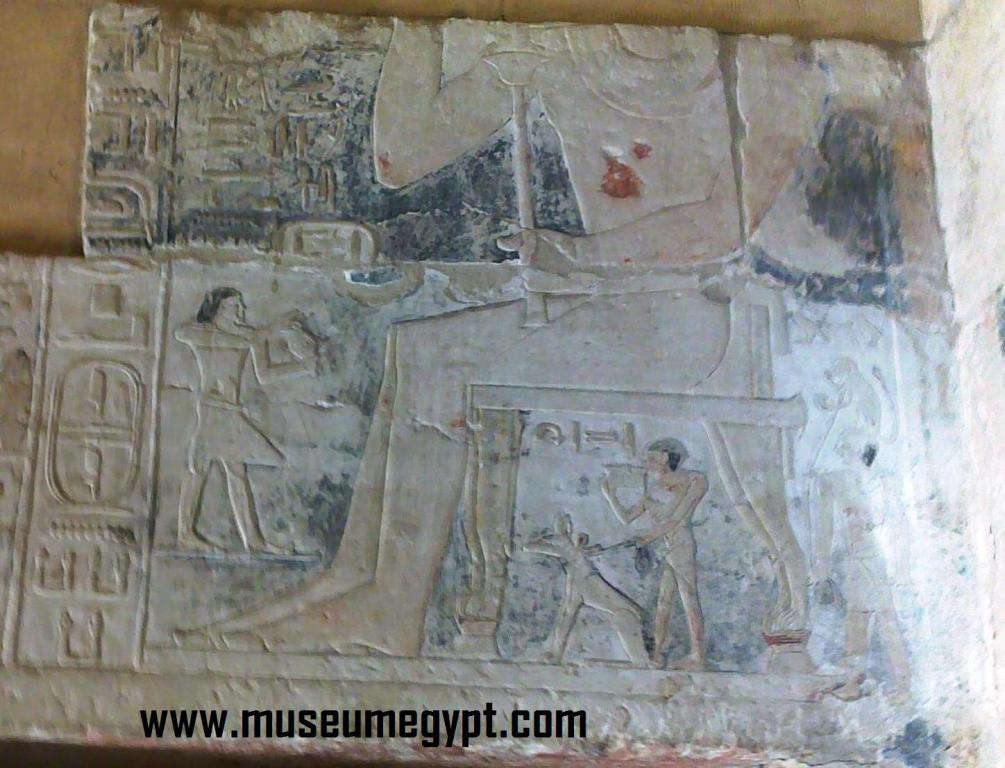
I have been searching in the impact and the influence of Ancient Egypt on the rest of the African culture and the Entire mankind cultures for a long while and ancient Egypt uniqueness never failed to astonish me. Always thinking of the amount of imagination required to innovate the Egyptian gods images and figures, the broad horizon of innovation that created the anthropomorphically gods who were depicted partly human and partly animal or shown as a mixture of two different beings as for god Ra as a winged sun-disc or as for the winged cobra snake or the headed scarab-man god or the winged scarab which has falcon wings once or Buprestidae -beetles wings instead and many other examples are found. In the of Anubis who was depicted as a crouched animal mostly described to be a jackal however to some experts Anubis shape is more to do with a dog most probably a Basenji than a jackal . The Basenji...the Egyptian Barkless Dog is a well-defined breed was tamed and bred by the ancient Egyptians in the old kingdom about 3000 B.C. Then it was introduced by the Greeks to Europe. The Basenji- Dog was kept in ancient Egyptian homes as a pet as for the example of the royal scribe Dedosobek votive stela which goes back to 2000 B.C. The stela represents Dedosobek , his daughter who sits on his lap and a basenji puppy is standing under Dedosobek seat. Anubis was often described to be the guard and the patron for both the mummy and the graveyard and always shown as a follower for the human in origin god Osiris as Anubis was to follow Osiris in everywhere he went. It seems that there was a muddle between the jackal and the basenji dog as being both animals similar in their habit of following human burials as a scavenger as for the jackal or just as a close pet as for the basenji dog.
The picture below is from prince Nekaw tomb in Sakkara, 2500 B.C and it represents him on his seat and his basenji dog.
By Yasser Kamel to Museumegypt, All rights reserved. Copyrig ©Musegypt.
Sunday, March 27, 2011
カイロ 博物館、クフ王 の 座像 は まれ な 物 でずね。
カイロ 博物館 に ゆいいつ な 座像 が ある。その 座像 は 象牙 を つくりた、高さ は 七 センチ、象 の して に クフ の カレトシオ゛おうじや の 名前 が あらわしちます゛ も ある。まあ、クフ の ざぞう は いちばん 小さ 物 が 発見された、しかし、クフ ペラミッド は いち番
おおきい物 でずね。By Yasser Kamel to Museumegypt, All rights reserved. Copyrig ©Musegypt.
Sunday, March 20, 2011
The IM-DUWAT, The judgment of Osiris. A
Generally, Book of the dead or the IM-DUWAT “that which belongs to the second life “was a stereotype –book used to be written and provided to royal family members as well as to the very rich Egyptians. Just few of IM-DUWAT books were discovered in good order and completion.Most of discovered books were found located inside coffins of the Egyptian dead or kept hidden in kilts of stone or wooden statues. The first complete IM-DUWAT seems to go back to the new kingdom however its first chapter was written during the old kingdom specifically during Cheops reign which is about 2500 B.C. The full book of the dead was found as Papyrus scrolls that can fill more than 20 meters long papyruses and fit in 150 A4 pages approximately. The most common chapter from the IM-DUWAT is the chapter of the twelve hours of the night which is partly found or completely carved on walls of tombs as well as found written on papyrus. However, the chapter of the twelve hours of the night was the most repetitive; it was rarely found in complete order and that was due to the high cost for writing it as a full book. . The most popular part of the chapter of the twelve hours of the night according to finds of New kingdom papyruses and mainly the ones of the high-officials is the part of the 11th and the 12th hours which represent the final transformation of Amun-Ra and his rebirth. The second popular parts of that chapter are the 3rd, the 4th, the 5th and the 6th hours which are found in most of carvings of Valley of the Kings tombs. The chapter of the twelve hours of the night is found in complete order in tombs of king Seti I and tomb of king Thutmoses III in the Valley of the Kings.
The 12th hour of the night, Painted by Yasser kamel
The judgment of Osiris chapter is the most famous part of book of the dead, where Osiris leads a tribunal aims at granting the deceased the promised second life according his deeds and his faith.
The Judgment of Osiris, Book of the Dead of Hu-nefer, Painted by Yasser Kamel.
The painting above is a part of Book Of The Dead of the funeral -royal scribe Hunefer" 1400 B.C" The original is displayed at the British museum.
It begins with weighing the heart of the dead against the feather on the scales under the supervision of Anubis " the jackal-headed god" or the dog-headed god who shouldadjust the scales and in the presence of Horus" the falcon-headed god" who represents the advocate for the dead.Then the weight of the heart against the feather should be observed by goddess Maat who has her eyes covered with a band” The Blind Justice”, her symbol is above the balance.Then the verdict of the weighing must be written by god Thoth god of knowledge and wisdom "ibis-headed god" and always the heart to weigh less than the feather. If the heart would be ever heavier than the feather it would be fed to a monster " hybrid of a lion, a hippopotamus anda crocodile " Then the dead should gets to the negative confession hall where the dead should proceed to the jury or the 42 assessors “top of the picture" where he should deny his sins and they must take notice in order to decide if he said the truth or never then they can signify to that by holding their keys of life "Ankh" which refer to mercy or by hold their knives if he seemed to be lying.
The two verdicts should be revised by Osiris "the god of the underworld" who always is seen seated on his throne accompanied by his wife Isis and his sister Nyphtis.By Yasser Kamel to Museumegypt, All rights reserved. Copyrig ©Musegypt.
The 12th hour of the night, Painted by Yasser kamel
The judgment of Osiris chapter is the most famous part of book of the dead, where Osiris leads a tribunal aims at granting the deceased the promised second life according his deeds and his faith.
The Judgment of Osiris, Book of the Dead of Hu-nefer, Painted by Yasser Kamel.
The painting above is a part of Book Of The Dead of the funeral -royal scribe Hunefer" 1400 B.C" The original is displayed at the British museum.
It begins with weighing the heart of the dead against the feather on the scales under the supervision of Anubis " the jackal-headed god" or the dog-headed god who shouldadjust the scales and in the presence of Horus" the falcon-headed god" who represents the advocate for the dead.Then the weight of the heart against the feather should be observed by goddess Maat who has her eyes covered with a band” The Blind Justice”, her symbol is above the balance.Then the verdict of the weighing must be written by god Thoth god of knowledge and wisdom "ibis-headed god" and always the heart to weigh less than the feather. If the heart would be ever heavier than the feather it would be fed to a monster " hybrid of a lion, a hippopotamus anda crocodile " Then the dead should gets to the negative confession hall where the dead should proceed to the jury or the 42 assessors “top of the picture" where he should deny his sins and they must take notice in order to decide if he said the truth or never then they can signify to that by holding their keys of life "Ankh" which refer to mercy or by hold their knives if he seemed to be lying.
The two verdicts should be revised by Osiris "the god of the underworld" who always is seen seated on his throne accompanied by his wife Isis and his sister Nyphtis.By Yasser Kamel to Museumegypt, All rights reserved. Copyrig ©Musegypt.
Thursday, March 10, 2011
Know more about Egypt History
Know more about Egypt History…The Basenji...the Egyptian Barkless Dog was kept in ancient Egyptian homes as a pet as for the example of the royal scribe Dedosobek votive stela which goes back to 2000 B.C. The stela represents Dedosobek , his daughter who sits on his lap and a basenji puppy is standing under Dedosobek seat. Info and Art by Yasser Kamel
Monday, March 07, 2011
全体 に、 古代イジプト は 馬 は いませんでした。
アフリカ は せいらい 馬 は いませんでした。全体 に 馬 は アジア に きました。ヒクソズじん の せんそう の 時 に 馬 の しよう はじました。イジプト の 中王国 の 時代 凡そ1700年 紀元 前に いちばん 馬 の 馬車 が つくりた。
Friday, March 04, 2011
Know more about Egypt History !
Know more about Egypt History ! The Basenji...the Egyptian Barkless Dog is a well-defined breed was tamed and bred by the ancient Egyptians since the old kingdom, 3000 B.C. Then it was introduced by the Greeks to Europe. Art and info by Yasser kamel.
Thursday, February 17, 2011
The Egyptian Museum, Humor in ancient Egypt.
A wooden toy of dancing pigmies. The Egyptian Museum.
Egyptians are humorous and in fact they were lovers of fun and sarcasm since the beginning of history. The most well known goddess for joy and fun was Hathor who also was goddess of music to whom a lot of temples were dedicated. The second famous god in ancient Egypt was Bes the god of fun , joy and music who is originally was more African as he was represented as a pigmy god holding a harp. Some of the ancient papyri which date back to old kingdom around 2500 B.C describe the desire for the royal family to have African pigmies brought peacefully or else to Egypt where they be employed as clown and jesters. Actually some of those musicians and jesters were local dwarfs who became rich and well off. The Egyptian museum has an interesting collection of toys includes a wooden dancing pigmies toy operates by bulling the cords that are attached to the rotating discs where the pigmies are attached.
The dwarf Seneb and his family. Cairo Museum.
Another example found which is a carving from Hatshepsut temple represents the chief of Punt tribe and shows his wife with a deformed body followed by a inscription mocks at that situation.
The chief of the Punt tribe and his wife.
God Bes while Harping, Philae Temple
By Yasser Kamel to Museumegypt, All rights reserved. Copyrig ©Musegypt.
Monday, February 14, 2011
Egypt is the biggest museum
for humanity and its heritage as it keeps what can represent more than 50 percent of mankind history and monuments. By Yasser kamel for Museumegypt.
Saturday, February 12, 2011
Egypt welcomes travelers back
Dear Travelers, sorry for the temporary shutdown, Egypt was under necessary
maintenance, we're happy now to welcome you back in a much better Egypt. You’ll be impressed
Friday, February 11, 2011
Sunday, January 30, 2011
Friday, January 28, 2011
The Graffiti in the ancient Egyptian temples.
The desire of keeping the self memory revived was not limited to kings and queens of ancient Egypt but was found with the very ordinary people of that time. The hidden reason behind having a lot of graffiti in ancient Egyptian temples or elsewhere was due to believing that the “ Ren” which is the title in the Egyptian Hieroglyphics, once it is kept it can lead the soul of the dead to find and recognize the deceased. Therefore leaving someone’s name can secure his rebirth and according to the ancient Egyptian religion and book of the dead, the creation of Man by god Ra required preparing five elements to make a human created. The first was the “ Ghed” which is the body, the second was the “ Ba” which is the soul, the third was the “ Ren” which is the name , the fourth was the double “ Ka” and the fifth was the “Shuyet” which is the shadow. The only hope for poor people to secure their rebirth was to carve their names on temples walls or floors or to be mentioned by their nobleman or lord in his tomb which we should not blame them for. The ancient Egyptian royal families and their entourage were able to afford to protect and keep their five elements so they never encounter much of obstacles that can prevent their resurrection, almost all were able to afford the expenses of the mummification so their Ghed can last and were able build tombs with much of texts, hymns and carvings which can lead their Ba back to them, also were rich enough to leave offerings that their Ka can enjoy it and therefore it remains nearby. Even were able to design tombs and burial chambers that overlook the true north to allow their “ Shuyet” or shadow to remain on sun rise and on sun set and definitely their Ren was easily saved in cartouche frames or carved in stone that can survive.
Ancient Egyptian Graffiti writings on Philae temple, about 300 B.C.
Some of the ancient Egyptian kings were keen to keep and protect their ancestor’s tombs and monuments and some kings were interested to carve their own names on statues of their ancestors after saving it from thefts or after getting it restored. Their aim was to secure the ancestor’s Ren as well as their own one.
A carving “above” from tomb of prince Nekaw, son of king Essi,2500 B.C shows the servant who was entitled to look after Nekaw’s grey hound hunting dog , the servant “Ren” name is mentioned right above. As it was traditional for rich people to allow their popular servants to be described in their tombs by name and exact features to ascertain their rebirth as reward for their achievements.
A carving represents praises for Thutmoses II and Hatshepsut.
The carving above represents praises for both king Thutmoses II and Queen Hatshepsut meanwhile it shows the removal of her “Ren” and her praises from the inscription for being her reign counted by the ancient Egyptians an illegitimate.
Nubian finger graffiti on an ancient Egyptian monument.
The Nubian nomadic tribes had inherited the ancient Egyptian graffiti culture. The Nubian pilgrims in their pilgrimage to Egyptian temples used to dig the sandstone with their fingers in a trial to leave their finger-prints and to collect the sandstone dust to bring to their village.
By Yasser Kamel to Museumegypt, All rights reserved. Copyrig ©Musegypt.
Saturday, January 15, 2011
Museumegypt team of Egyptian tour guides
Saturday, January 08, 2011
カフラ の 座像
Hatshepsut and the trick of the Hotep positioning.


The Hotep-Shape Gardens in Der Elbahari temple.
Der Elbahari temple.
Queen Hatshepsut was one the most remarkable queens in the history of ancient Egypt as well as for the mankind history. Her unique personality and her natural intelligence next her outstanding determination were her most effective tools on her struggle for keeping the throne. She ruled between 1508–1458 BC and according to ancient historians as for she ruled in 1st Shemu “ summer season” on day4 and died in Year 22, 2nd Peret” winter season” on day 10 of her reign.
The sudden death of her brother-husband Thutmoses II was a serious shock for her as she became a very young widow and a mother for two daughters. Hatshepsut determined to become the ruling queen for Egypt however being a mother of two princesses and no male hair among, it seems that her plan of becoming the ruler of Egypt was much resisted by clergy of the Egyptian temples and also by some of her royal family members. In fact there was a wave of resentment on her decision to rule as a solo-ruler which inspired the opposition seeking an alternative successor for Thutmoses II and actually managed to reach Isis who was an unknown mistress for Thutmoses II . We just can imagine the shock which Hatshepsut had once that bad news reached her also the serious protection Isis was provided once she gave birth to a royal son. The queen’s opposition succeeded to claim his royal birth and announced him as Thutmoses III son of Thutmoses II and the legal successor for his father. Hatshepsut denied his royal birth right for rule as him was born of a mistress but her opposition were smart too as they forced the idea of allowing Thutmoses III to be married to one of her daughters to become appropriate for rule. Hatshepsut managed to become his princess-in-regent as well as a mother-in-law and a step-mother and according to many researches Thutmoses III was disdained by Hatshepsut and was allowed to share in the rule. The queen first trick was to portend that her refusal by her opposition is based on being her a female queen therefore Hatshepsut decided to be shown in all of her carvings as a man who is bearded and often dressed with a kilt even in her inscription on her temple the texts addressed her as a king .Her second trick was her claim of being herself divine in birth as born of her father god Amun the top of the gods pantheon which drifted her opposition attention to the event of being herself telling the truth or the vice versa. Her determination of getting a burial in the valley of the kings was so unusual but breaking royal and religious rules was impossible therefore her most powerful trick had to exist. The very early hieroglyphic character “ Hotep” which has several meanings such as verb to offer ,to calm ,to rest to relax ,to be happy and to be appeased or as nouns also it means offerings and an offering table. The same character was included by royal names of Middle kingdom kings as for the Montuhoteps as in name of king Montuhotep I who reunified Egypt and stopped its civil war therefore his name means Montu” god of war” is appeased. The most common use for the Hotep was to be the offering table for gods and kings once become deified in their tombs.

A stone table with the Hotep sign in the center. Alexandria national museum.
The Hotep sign resembles an inverted letter “T” in shape and it was inspired to king Muntohotep II to take as design for his temple where it contained his burial chamber and also pointed at his ancestors tombs direction. Doubtless that Senmut her architect and lover borrowed Muntohotep’s old design to provide Hatshepsut with a royal burial simply by building her a tomb at the back of her temple similarly with king Muntohotep II or by attempting to dig her tomb deeply in the cliff to be linked with the valley of the kings. Anyway her goal was reached as Her Temple at El der elbahary stood at a distance of only a few hundred meters in a straight line from the tomb that queen Hatshepsut had ordered to build for herself in the Valley of the Kings on the other side of the mountain. So her best trick to get an equal burial to male rulers was to adapt the Hotep positioning for her temple and tomb thereby she managed to get the equality she desired. It seems that her use for her father tomb Thutmoses I was unsuccessful and her admission to that tomb was prohibited but some final trick seemed to help her to cross with her body into the valley of the kings most probably after she sacrificed her identity where she was found. Her mummy was found in the tomb of her wet nurse, Sitre-Re, in kv60 as an unknown woman with no royal names or titles then latter was brought to Cairo Museum and left there for ages then just in the 2009 queen Hatshepsut identity was determined by the Egyptian Supreme council of Antiquities using the DNA test for the first time. In fact her mummy examination referred to her death to be normal in her middle age suffering Diabetes, arthritis.
By Yasser Kamel to Museumegypt, All rights reserved. Copyrig ©Musegypt.
Thursday, January 06, 2011
A Happy 2011 to all
Museumegypt wishes its followers and readers a very prosperous, wealthy and healthy year
Monday, September 13, 2010
King Tutankhamen was the son of Akhenaton! Was He?

A bust for Tutankhamen, Cairo Museum. Painted by the author.
Most of archaeological studies led us to one conclusion which is being
king Tutankhamen is the son of Akhenaton but none of it provided us with any hard evidence. The DNA and the Ct tests that were made for Tutankhamen in the Egyptian Museum Clinic in 2010, which were followed by the supreme council of Antiquities statement. That statement determined that Tutankhamen was Akhenaton’s son but did not
Specify the name or the title for the referee mummy or mummies where the DNA sample came from once they were testing king Tut mummy which makes it’s results to be doubtful. For many decades Tutankhamen was believed by some Egyptologists to be Amunhotep III son and that was due to some texts found carved in the Karnak temple which referred to him as a son for a king imagined to be Amunhotep III!. Maybe that conclusion was due to having no written or carved names found for Akhenaton in the Karnak temple as being him hated by its clergy.

Text refers to Ankhesamun”Akhenaton’s daughter” to be Tutankhamen’s sister, Translated by the author.
This may surprise the readers of this essay, a text refers to the fact that king Tutankhamen was Akhenaton’s son. Reads “ It is mentioned {to } the king {by} Nebet-hat {who} comes wailing
{on} for {her} brother the Osiried- King.” The text is incised on the back of Tutankhamen innermost shrine. The Hieroglyphics writing can be tricky as in this text the use of the word Nebet-hat has a straight meaning which is merely a name of the goddess Nephthys who was Osiris sister by birth ? but the hidden meaning was to refer to
herself as a sister for king Tutankhamen who is considered in the text to be Osiris and therefore Nephthys is to represent Tutankhamen’s sister and wife “Ankhesamun”.


From the left. Head for Nefertity , A slab has Akhenaton and his family. Copyrig ©Musegypt 。
Friday, August 20, 2010
Aswan tremendous Unfinished obelisk and a rare hieroglyphic text carved in the northern granite quarry. B
Aswan tremendous Unfinished obelisk and a
rare hieroglyphic text carved in the northern granite quarry. B

" King of Upper and Lower Egypt- {Men –Kheper-Ra}, child of Ra of his body, his beloved { Thut-moses III } master of offerings, he who is given the life as the Sun forever, made with love two great obelisks in the abode of Amun, in the Karnak.” Translated by the author from the Hieroglyphics”

The area in the northern quarry where Thutmoses III obelisk came from.
Thutmoses III “ 1300 B.C ,is the great owner for the text found, in fact he was one of the best builders for temples and obelisks among the pharaohs in general and just enough to mention his four famous obelisks which occupy for vital spots in four countries. His famous in London which known as Cleopatra’s needle, then
His unique one in New York as well as his one in Istanbul and his fourth one in Rome.
Copyrig ©Musegypt 。
rare hieroglyphic text carved in the northern granite quarry. B

" King of Upper and Lower Egypt- {Men –Kheper-Ra}, child of Ra of his body, his beloved { Thut-moses III } master of offerings, he who is given the life as the Sun forever, made with love two great obelisks in the abode of Amun, in the Karnak.” Translated by the author from the Hieroglyphics”

The area in the northern quarry where Thutmoses III obelisk came from.
Thutmoses III “ 1300 B.C ,is the great owner for the text found, in fact he was one of the best builders for temples and obelisks among the pharaohs in general and just enough to mention his four famous obelisks which occupy for vital spots in four countries. His famous in London which known as Cleopatra’s needle, then
His unique one in New York as well as his one in Istanbul and his fourth one in Rome.
Copyrig ©Musegypt 。
Subscribe to:
Posts (Atom)
Art in ancient Egypt ! My T.V talk today! I hope you find it enjoyable!💙💙💙
Art in ancient Egypt ! My T.V talk today! I hope you find it enjoyable!
-
象形文字 で 蜂 の 名前 は ビイチイ でした。古代 イジプト の 神話 に 蜂 は 太陽 神 様 の とも ですくて、蜂 も 蓮 と 朝顔 を 匂う、蜂 は 象形文字 で ごい は 王 です。それから、蓮 の 匂うこと は うまれかわり が 印 を しました。古代 イジプト ...
-
Art in ancient Egypt ! My T.V talk today! I hope you find it enjoyable!
-
The Egyptian wooden-training sword of king Tutankhamun. The Egyptian fighting-sword of king Tutankhamun. Ancient Egypt had developed ...