Wednesday, November 01, 2006

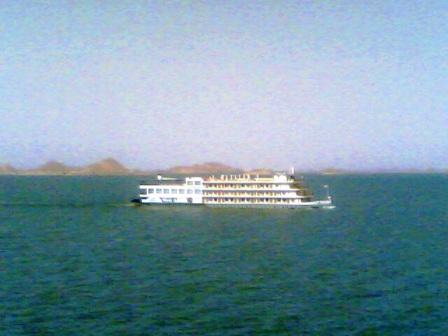
Cruising Lake Nasser on board of Prince Abbas Part .C


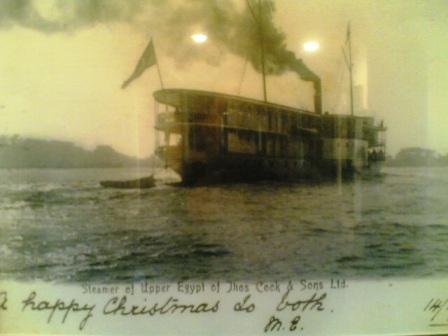
Old Prince Abbas.


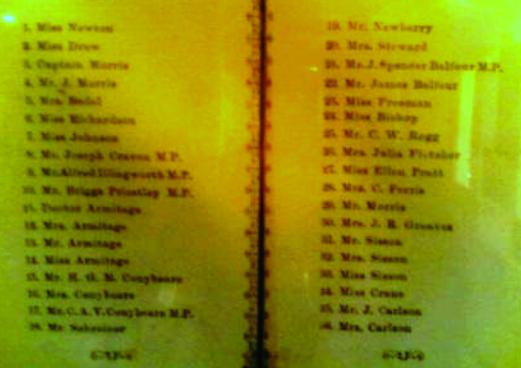
The rooming list of the first passangers on old Prince Abbas for Thomas cook.
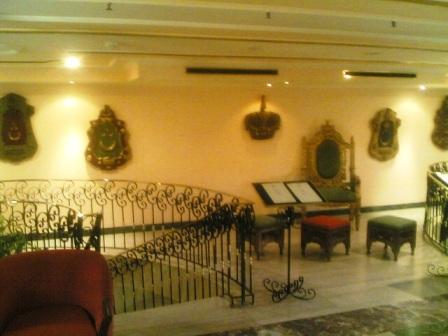


Reception.
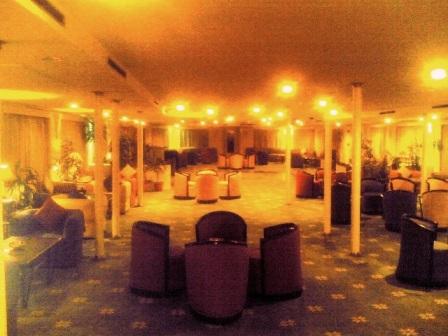

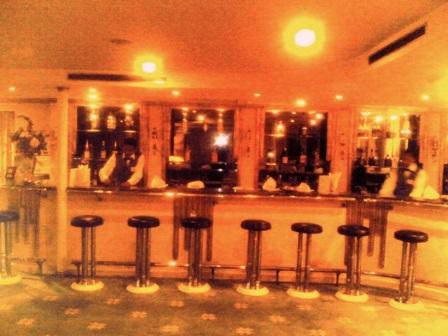
Lounge bar

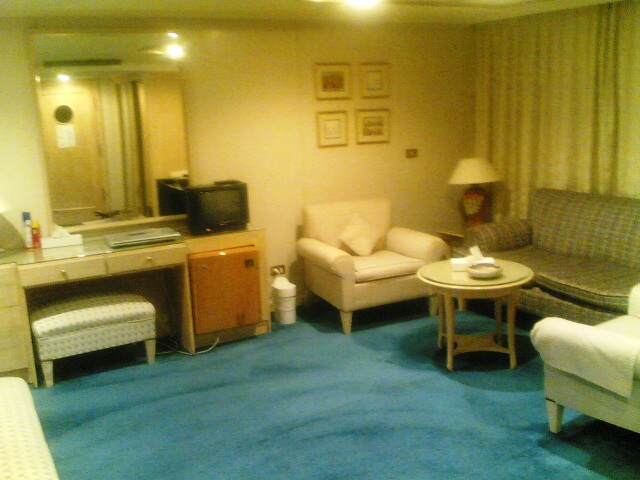
A royal suite
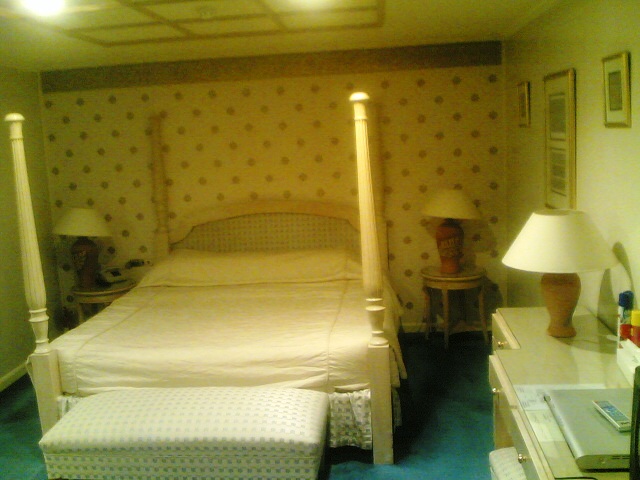

A cabin


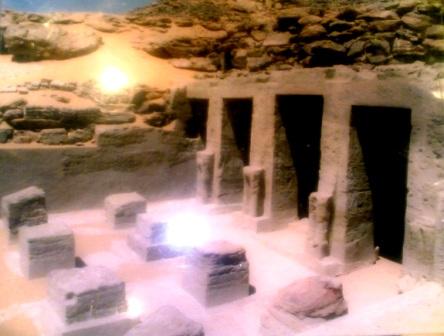
We started our visit to Wadi El Sebuaa at morning of Wednesday. New Wadi El Sebuaa is a recent site, as the original was covered with lake Nasser . Wadi El Sebuaa has three main temples, the first and the main was built by king Ramasess ll and with many similarities to most of his temples as it shows all of his famous wars, in addition to the general offering scenes. The most outstanding feature for Wadi El Sebuaa is the avenue of sphinxes that bear the facial features of the pharaoh himself .The title of the temple had been inspired to locals from that avenue as it means the valley of lions .This temple is carved out of sandstone as most of the temples of the Nubian desert and also had been used later by the Copts who left their graffiti and their crosses . An interesting scene made on blaster found at the sanctuary, represents Saint Peter while being surrounded by the ancient carvings and the cartouche of king Ramasses ll.

Saint Peter with the cartouch of Ramasses II beside.


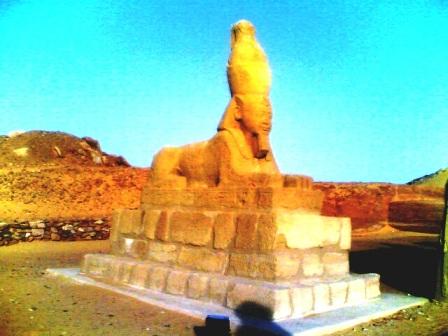
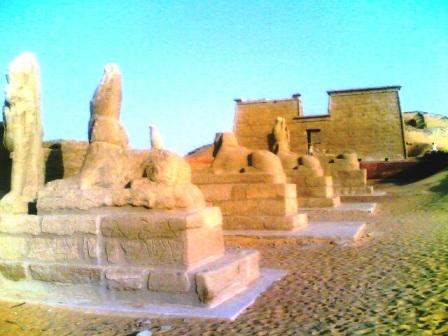
The avenue of sphinxes.
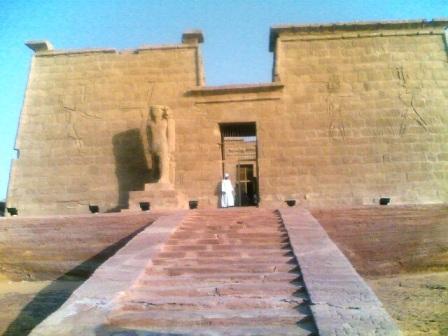

The Pylon of Dakka.
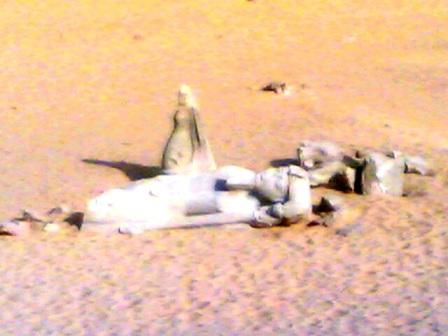

A damaged statue for Ramasses II it used to be a pair fronting the pylon.

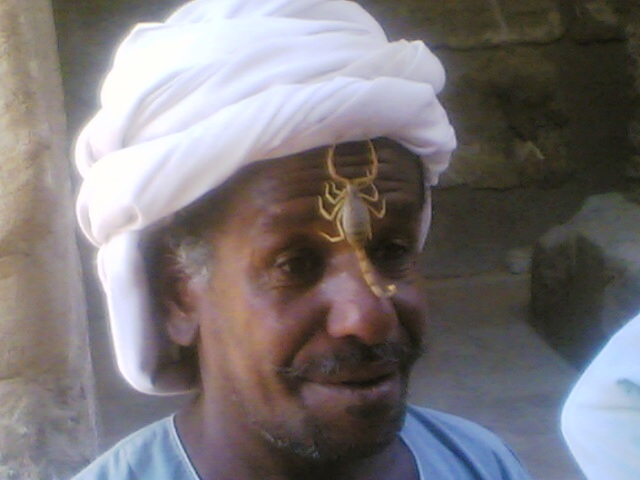
Then we walked the distance between temple of Wadi El Sebuaa and our second temple here which is called the temple of Dakka. The recent title for this temple was created by the Nubians who used to live around and it meant "scorpion". The temple keeps it's unique pylon which is the highest ever you can find in this area of Egypt, the pylon, most probably was rebuilt by the Romans. The open-court is totally ruined while the interior is well preserved. The outermost hall was built by the early Greek dynasty while the inside halls and rooms were founded by a Nubian dynasty as we can read the cartouche of king Erkamen. The sanctuary was rebuilt by the Romans in so low standard. The temple was dedicated to goddess Tefenut and god Shu ,in addition to Merwel and different other gods. While our third temple for this morning was El Mohareq temple which was relocated by the Unesco next to Dakka. The temple was originally built by the Greek dynasty and dedicated to god Serapies ,then was restored by the Romans. The Title of the temple means "the burnt one" and may that refer to the war between the Romans and the Nubians where the second team burnt the temple. El Mohareq temple was our last visit at Wadi El Sebuaa . then we never missed the wonderful sunset at the hills of this nice area of Egypt. Then Prince Abbas contioued it's sailing towards Amada.

View Dakka Temple.
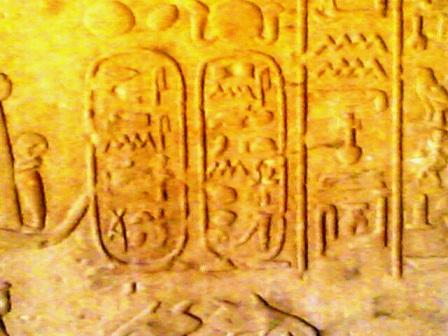

Cartouch of king Erkamun at Dakka.


God Shu and Goddess Tefnut at Dakka temple.

The Mouhareq temple.


A unique sunset

Cruising Lake Nasser on board of Prince Abbas Part D

We started our tour on Wednesday afternoon ,crossing the lake to the shore where we could spot three sites. The first was the oldest among them as it dates back to the reign of both kings, Tutmoses lll and his son Amunhotep ll which is around 1400 BC. The temple of Amada was rescued by the French team once they had come up with a sophisticated plan to transfer the temple before the water to reach. First of all they built a track meanwhile , they had sawn the temple up from the base then managed to chain and left over a flat car in order to drag it across that track. They were able to bull it at least for 1.6 KM ,then it took the lake less than three month to cover the original site. Amada temple is an outstanding one with it's vivid colours and scenes as well as the amount of the Nubian graffiti which represent their tribes and soldiers on their way to fight the Roman garrisons northward. In addition to the interesting offering scenes.


Temple Of Amada.Thutmoses III in the presence Of god Rahorakhat.


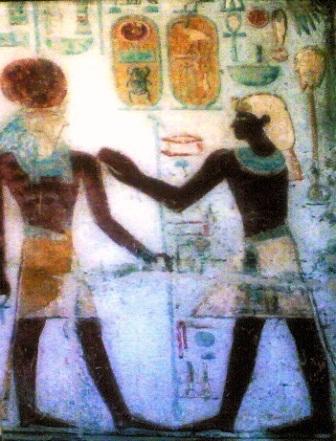
Temple Of Amada.King Thutmoses III presents the Heb-Sed ceremony.

The second temple at Amada site was El Derr which was built by king Ramasess ll, around 1300 BC. El Derr is an exact miniature of the great Abu Simble, where you see the battle scenes and the typical offering scenes.


The Derr Temple.


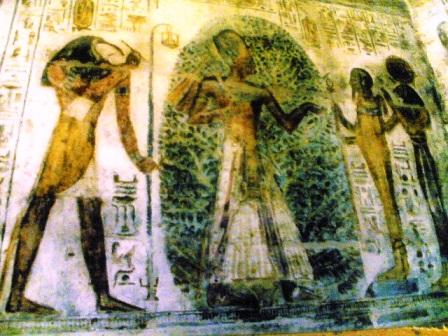
The Holy tree where god Thot writes the family names of the king on it's leaves.


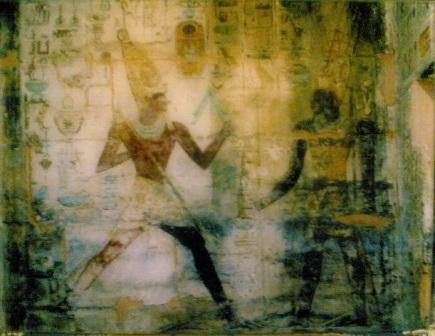
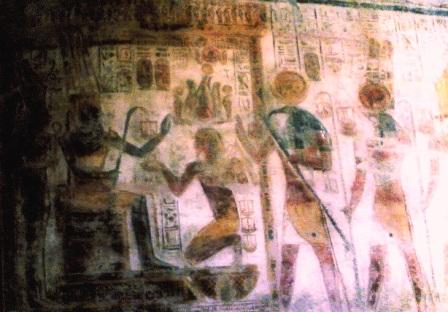
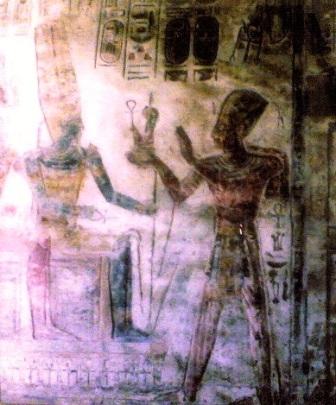
Derr temple. Kneeling Ramasses receives the Heb-Sed sign of throne renewal.

Derr. Ramasses presents flowers to the gods

Presenting the sign of justice to god Amun

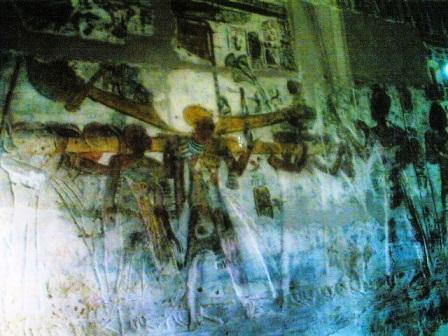
The divine marriage boat

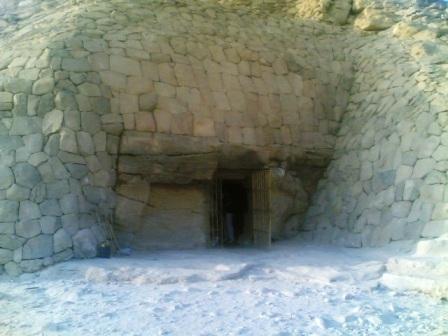
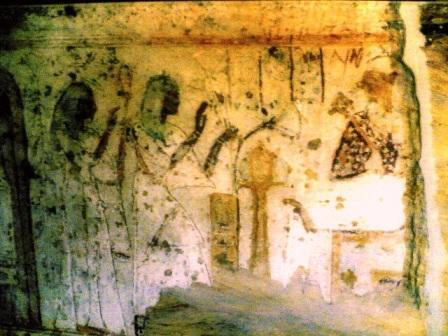
Our last visit at Amada site was to the tomb of penth "pentu". Pentu was a high official appointed at that area by king Ramsess vl and was rewarded by the king two precious silver vases.

Tomb of Penut

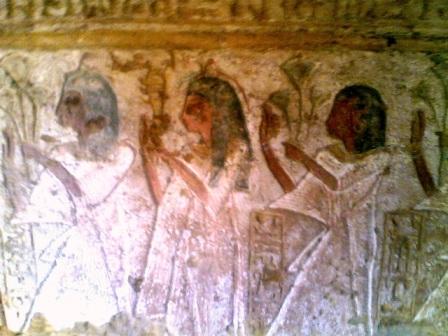
Intact scenes with vivid colours

Offerings to Penut

A wonderful sunset.

Then we couldn't miss the wonderful sunset at the hills of this nice area of Egypt. Then Prince Abbas moored the whole night at Amada site.
Cruising Lake Nasser on board of Prince Abbas Part E.

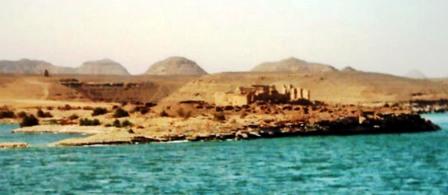
On Thursday morning Prince Abbas had moored next to Qaser Ipriem and we all assembled at the top deck in order to watch that unique site.

Qaser Ipriem used to be a hill about seventy meters high before Lake Nasser to surround and turn to an island. The title of the site means the primer palace; Ipriem was derived from the Latin word prime while Qaser is the Arabic word for palace. Qaser Ipriem area was among the most fertile areas of lower-Nubia as the Nile used to flow next where it is found and it's soil used to be enriched by the annual floods ,that allowed It's dwellers to benefit from these features and supply the countless travelers and pilgrims all facilities required from accommodation , food, drinks and so on. Qaser Ipriem's hill was the primary signal to Egypt for all pilgrims and travelers and due to that it used to have all means of comfort and conveyance to attract all caravans and all fortification. We are still able to see the ruins of the Nubian fortress which is around 700 BC and the royal chapels of the 18 &19 dynasties which are between 1400 & 1300 BC beside the Coptic cathedral which was built after 500 AD. Most of the finds of Qaser Ipriem are displayed at both the Nubia museum and at the Coptic museum. Then prince Abbas continued sailing to Abu Simble site.

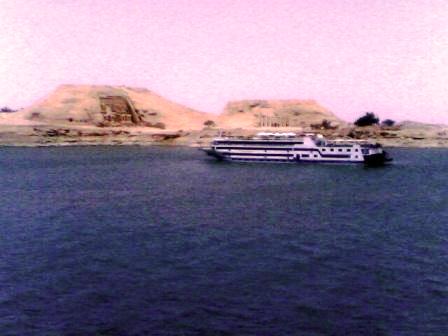
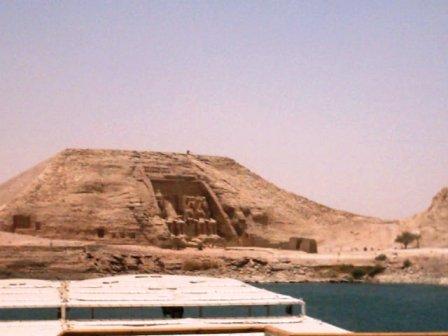
Before midday everybody almost gathered on the top deck to attend the charming approach to the great site of Abu Simble then Prince Abbas played a very impressive music belongs to Vangelis. Nothing was much more impressive in our travels than the approach to Abu Simble


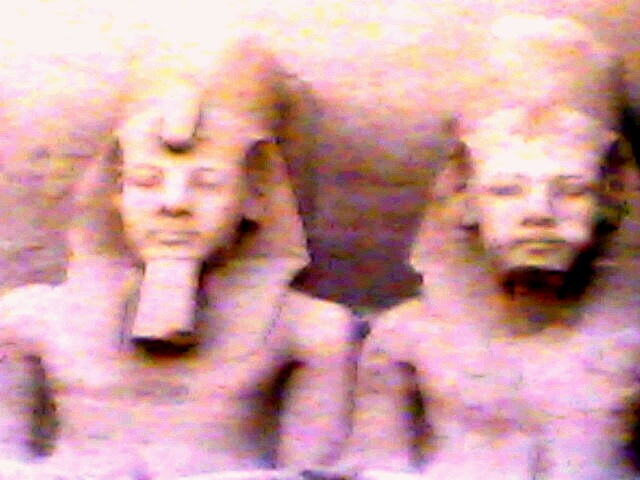
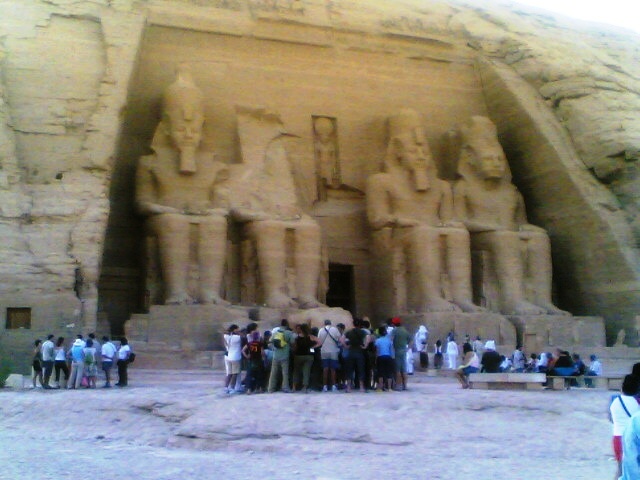
The Great Abu Simble and the Small Abu Simble were both saved by the UNESCO as well as by many countries which supported Egypt and the human heritage. The Great Abu Simble was transferred between 1964-1968 to a much suitable spot, enough high from Nasser lake. Originally the great temple was carved out of sandstone hill exceeds 45 m in height which the lake could cover all within few years .The UNESCO experts had to build a surrounding coffer-dam around the two temples which two concrete domes on the new locations then both temples were dismantled and assembled within these four years. While searching for perfect location for the great temple the UNESCO organization had the challenge of trying to keep the unique alignment with the sun which the great Abu Simble had been to have. The ancient Egyptians had to study where to find mathematically and astronomically a certain spot where it can receive the rays twice a year to shine on the face king Ramesses II on both occasions his birthday and his coronation. That phenomenon used be witnessed on the 21of February and on 21of October yearly before to be moved as the sun used to reach innermost room of the temple across the pillared halls and the vestibules to through it light on the statue of king which is among the four statues of the holy of holies at sunrise twice a year. While all efforts and the high budget "exceeded 50 millions USD" presented by most of the world they could not find the correct angle to keep the alignment or the original dates so they missed a day from each and became the 22second from each month.
The giant Abu Simble had a great impact on our southern neighbors who had never seen such as a gigantic structure ever even they believed king Ramsess to be no man his temple is a creation of god therefore that pharaoh had been deified over there.

We enjoyed the visit to Abu Simble and also we attended its famous sound and light show. Then on morning of the following day we flew to Cairo to continue our tripe for another four nights.

Approaching Abu simble on board Prince Abbas.

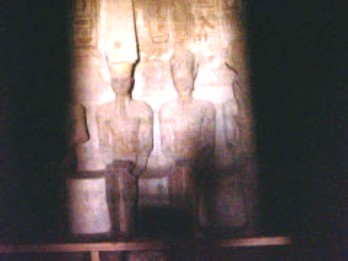
The holy of the holies.The king next to the gods

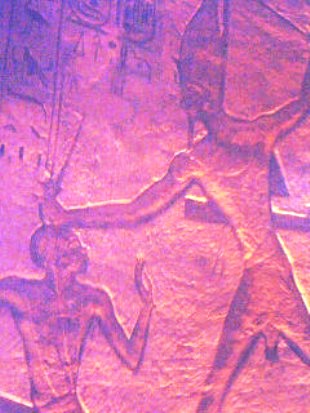
The king and a Nubian warrior.

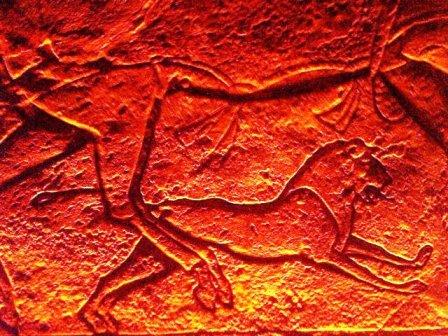
One of the lions that accompany the king in his wars.

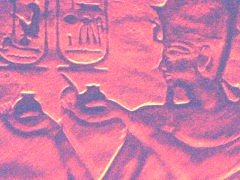
The Nu jars of offerings

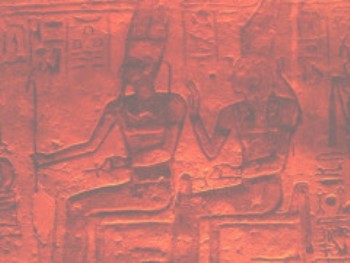
Amun and Mut

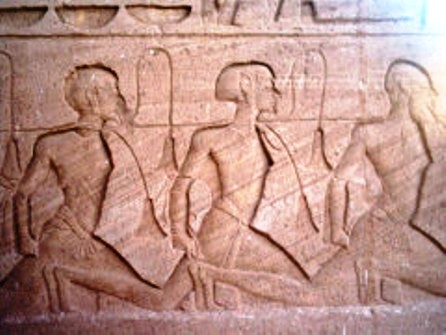
Captives. The great temple

Queen Nefertari.The small temple

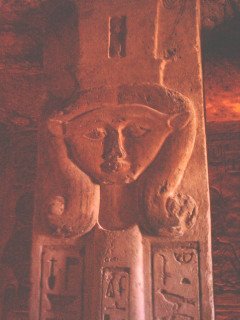
A Hathoric pillar

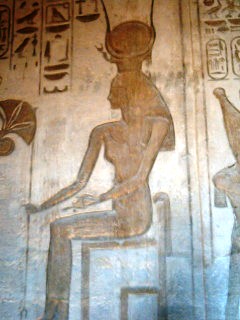
Goddess Hathor

Ramesses II name


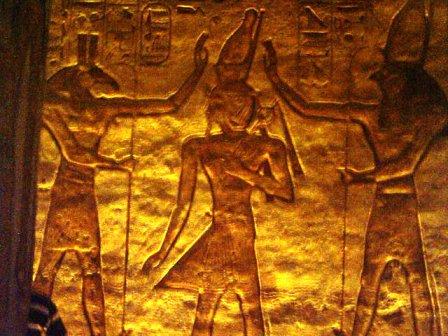
Seth and Horus,coronating the king

The small temple of Nefertari.
Copyrig © 2006.

Art in ancient Egypt ! My T.V talk today! I hope you find it enjoyable!💙💙💙

Art in ancient Egypt ! My T.V talk today! I hope you find it enjoyable!